Archive for the 'Guitar Building Logs' Category

Guitar 1002 – Plates

May 30, 2011

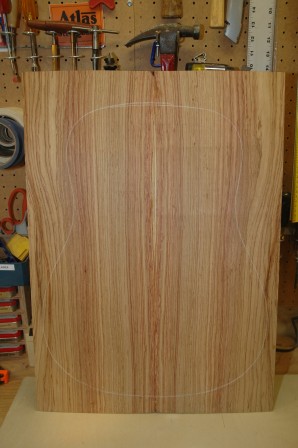
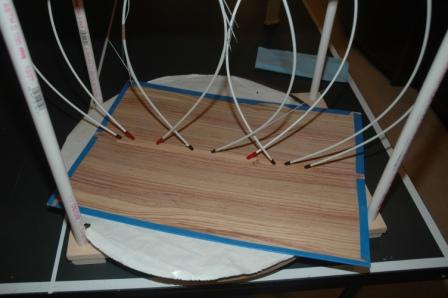
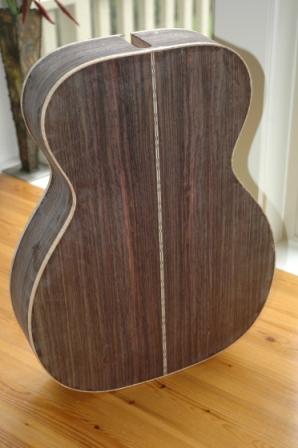
I used the drum sander to bring the back plates down to .090″ then jointed and joined in the spanish joiner jig.

110530joiningjig

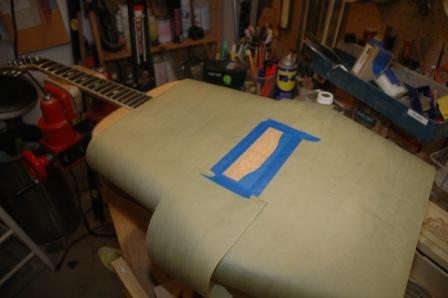
After drying, the joint was sanded, a protective posterboard cover was taped to the outside, and the center strip was glued using the go-bar clamp.

110530backjoined

110530backstrip

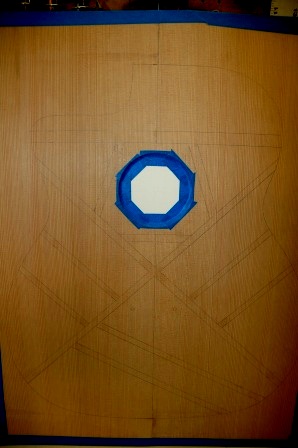
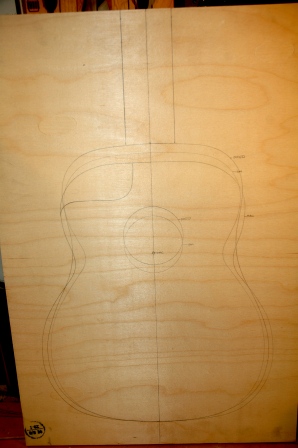
The top was similarly protected with posterboard (I’ve dinged too many top plates) and the bracing pattern was pencilled in.

110530bracingpattern

Guitar 1002 – Soundhole Reposted

May 30, 2011

I am having problems with Linksalpha.  This is a test to see if it posts to facebook.

Guitar 1002 – Soundhole

May 30, 2011

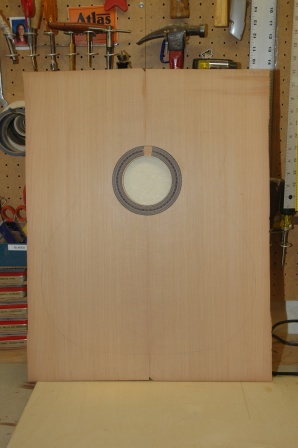
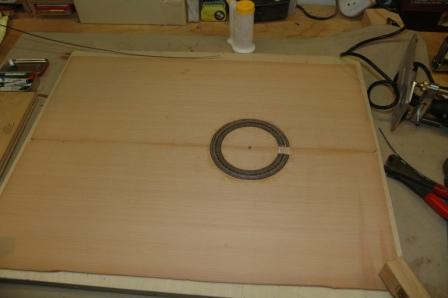
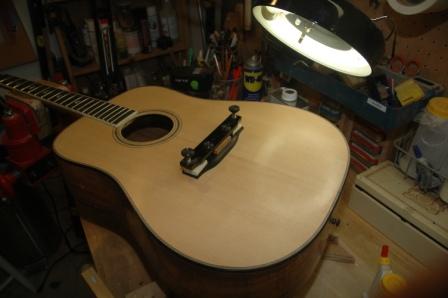
After installing the rosette and sanding it down flush, the soundhole has been opened.

110530topwithrosette

Guitar 1002 – Join Top Add Rosette

May 29, 2011

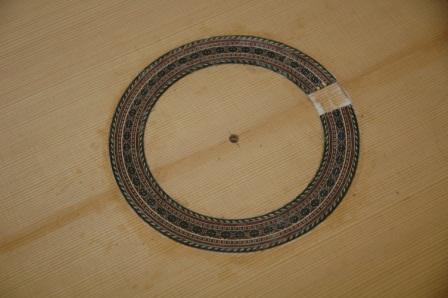
Planed the top plates down to .115″, jointed, then joined.  Routed for the rosette, then proceeded to glue it in upside down.  Really?  Pulled it out quickly, reversed it, and pushed it back in right side up.  Everything looks a bit wonky from all the glue about, but experience shows that scraping and sanding cleans it all up beautifully.

110529rosettedetail

110529rosettetopplate

Guitar 1001 – Ready for Delivery

May 14, 2011

What with going to school and learning to teach, and actually then teaching, I have seen serious erosion of my time available to devote to building.  So it has been almost a year in elapsed time since I started this Koa Dreadnought.

Today, it is finished.  I have contacted the client to arrange pickup.  He can take his time, as I will get to play it more the longer he waits.  It’s hard to give up these guitars, I want to keep them all, but I have too many anyway to begin with.

Today I crept down into the shop, trying not to wake my sleeping son who was crashed in the basement after his night out at the prom.  Dress the frets, polish the saddle and nut, oil the fretboard, install the pickguard, put the strings back on, whoops, clean out the ort from inside the box, install the label, then put the strings back on.  Tune it, play it, smile, weep, move on.

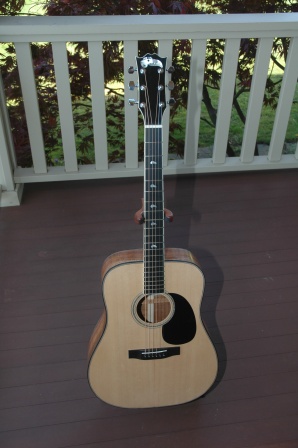
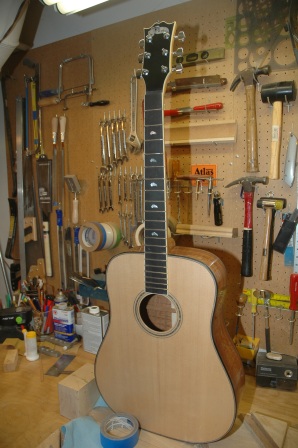
110514dredheadfront

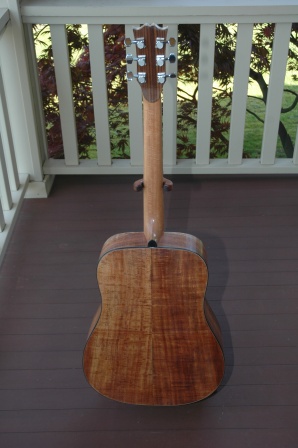
110514dredheadback

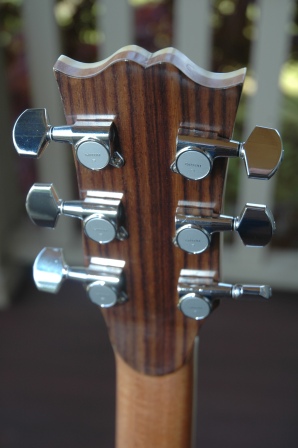
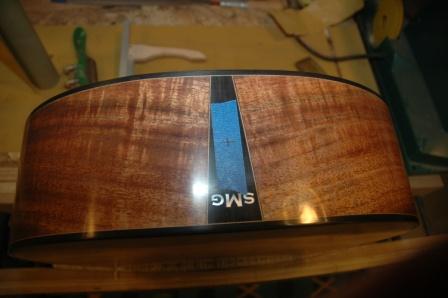
I like this little rosewood veneer backing.

110514dredbackfinished

110514dredfrontfinished

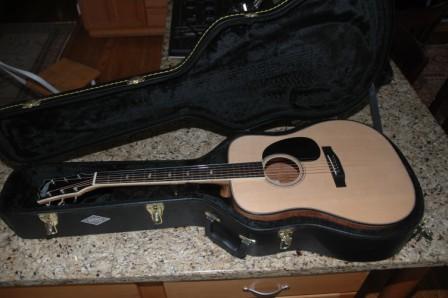
110514dredincase

Guitar 1001 – Moments from Completion

May 13, 2011

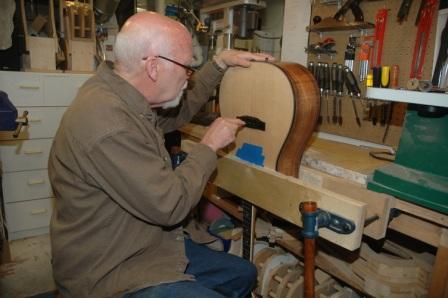
I predicted I would be done with the Koa Dreadnought by Sunday, and I even stuck my neck out and told the customer.  So damnit, I will finish it by Sunday.  The frets have been levelled and sanded as well as tapered.  The nut and saddle have been roughed out to approximate shape and dry fit onto the guitar.  The bridge pin holes have been tapered and string slots have been sawn in.
110513pinslots

I have employed Professor Cuthbert Calculus to do some work for me as you can see in the photo above.

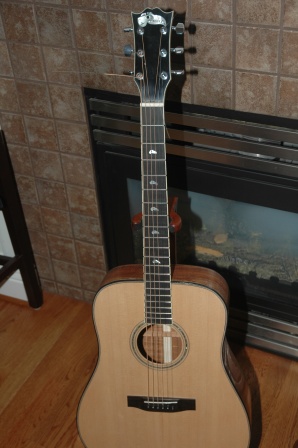
I strung it up, tuned it and let the strings settle in.  To my amazement, my rough setup work was perfect.  The saddle is the proper height, the nut string slots are at the perfect depth, and the fret levelling was flawless.  I think all those previous guitar setups have proven to be useful.  Perhaps I now know what I’m doing.  Nice bold sound, as is the custom for a dreadnought.
110513strung

So, I’ll let it settle overnight, then tomorrow I’ll hit the punch list:

1.  Install sMg label after blowing out all the crud inside the box.

2.  Final buffing.

3.  Shape then polish nut, glue to neck.

4.  Shape then polish saddle, place in bridge.

5.  Dress frets and fretboard.

6.  Tighten truss rod for miniscule concave setting.

7.  Install pick guard.

8.  Clean case and attach sMg Guitars label.

9.  Call Steve and have him come pick it up.
Guitar 1001 – Knocked Down and Buffed Up

May 7, 2011

Happy Birthday Sister Cyndy!  In honor of your birthday, I did NOT work on your uke.  Rather, I finished knocking down and buffing the Koa Dreadnought.

The finish will get another buff after setup to bring on a real shine.  The lacquer under the fretboard extension was stripped off, and the neck was glued and bolted on.

110507clampneck

After setting, the end pin hole was drilled and the tuning machines were installed.

110507markendpin

110507neckmounted

The bridge location was determined using MATH!  The lacquer under the bridge was stripped in preparation for gluing.

110507stripbridgelacquer

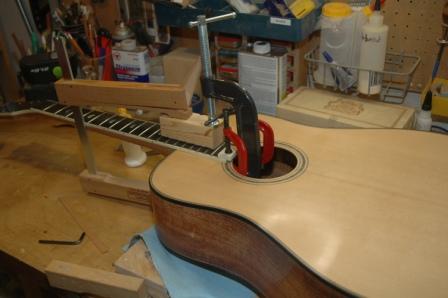
The bridge was glued and clamped with the fancy bridge clamp from LMI.

110507bridgemount

Guitar 1001 – Knockdown Countdown

May 6, 2011

Spent several hours today knocking down the lacquer finish on the Koa Dreadnought.  A light first brush with 220 grit on the high spots, followed by a serious attack with 400 grit until NO shiny dimples remain.  A thorough dry sand with 800 grit leaves a very smooth flat surface without breaking through to the wood.

Tomorrow a quick wet sand with 1000 grit before the two stage buff on the buffing wheels.  The neck will be checked for fit and adjusted if necessary.  The lacquer on the top which is under the fretboard will be removed with Stryp-Eze then the neck will be bolted and glued in place.

Guitar 1001 – Knockdown!

April 23, 2011

The lacquer on the koa dreadnought has cured for two weeks so it is time for knockdown.  Knockdown is where you sand the lacquer with increasing fineness of grade sandpaper on blocks.  The key is to remove all high spots, orange peel and drips until the surface is mirror smooth.  Each decreasing grade of grit removes any scratch marks from the previously higher grade of sandpaper.  It’s critical not to sand through the lacquer.

220 dry to remove drips

400 dry to bring surface down to flat, removing orange peel.

600 wet

1200 wet

Buff!

110423neckfront

These shots are before sanding.

110423neckback

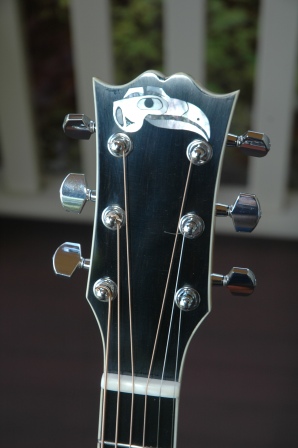
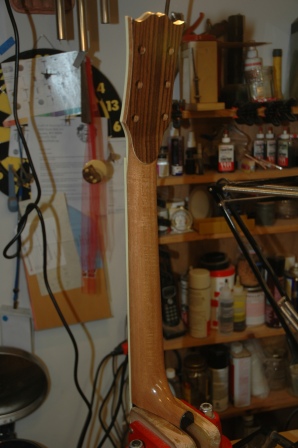
Note the rosewood veneer backing on the headstock.

110423frontlacquered

110423backandneck

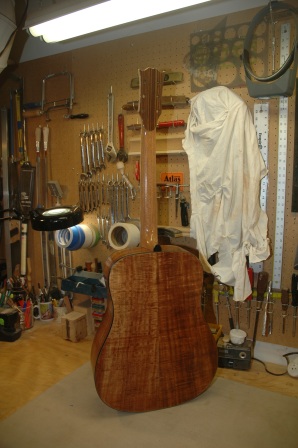
The koa is just magnificent.

Guitar 1002 – Side Bending Progress

April 21, 2011

The first bent side is out of the bending machine.

110421sidebent

The resulting bend is accurate yet not tight enough.  I’m resigned to the fact that I also need to apply more bend with the bending iron.

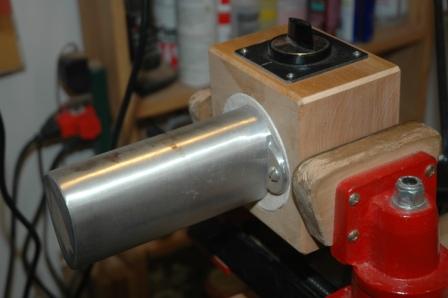
110421bendingiron

I’ve had limited success with the bending iron, mostly due to wood being too thick and preloaded with tiny cracks.  The machine bend of the first side did produce two minor cracks, which I filled with CA glue.  I took a first pass attempt at increasing the tightness of the bends with the bending iron, and found I could make some headway on tightening the bends and not introducing new or wider cracks:  all due to the nice .070″ thickness of the sides.

I will complete the hand bending just prior to installing the sides onto the work board, which is still under construction.

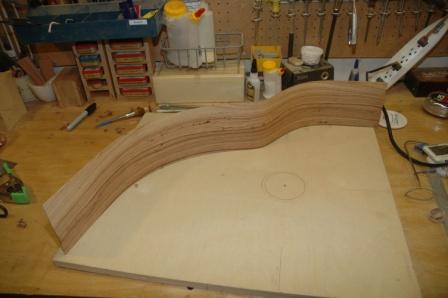
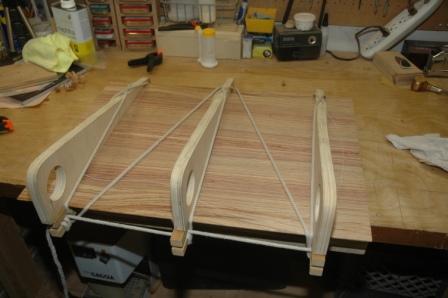
110421workboard

The workboard will be finished with sliding cauls along the outside border of the sides.  The sliding feature will allow me to use this workboard for dreadnoughts, OM’s and this Macaferri style body, along with others in between.

I usually build in a mold, which is only appropriate for guitars with dovetail or mortise/tenon bolt on necks.  The workboard is necessary for the spanish heel type construction.  This will all become obvious when I get to the step where the sides are glued to the top which has been attached to the neck.

I will have to provide a small radius bowl in the lower bout area of the workboard to accommodate radiussed X bracing.

« Prev - Next »