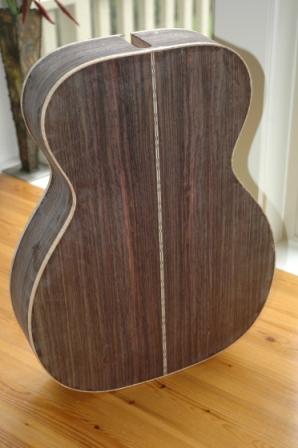
Guitar 804 – Top and back braced

September 28, 2008

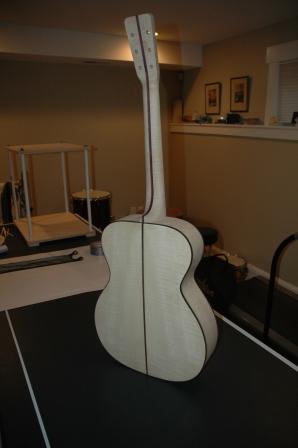
This weekend I completed the bracing of the top and back.  Used my sanding machine to shape the braces and am very pleased with the outcome.  Last time I mounted raw braces (after radiussing) and chiseled them to shape.  This time I shaped the braces to a sharp peak using the belt sander after using the Luthier’s Friend to taper the ends.

First step was to install the back strip, then cut out the space for the back braces.
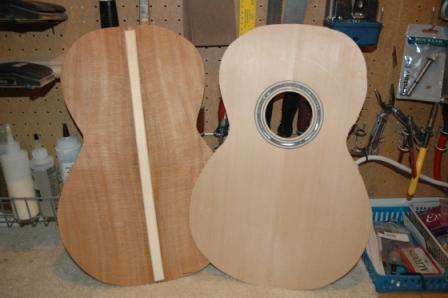
080928backandfront.jpg

Then I radiussed the bottoms of the back braces to 15′ and the x-braces for the top to 30′ using the contour dishes.
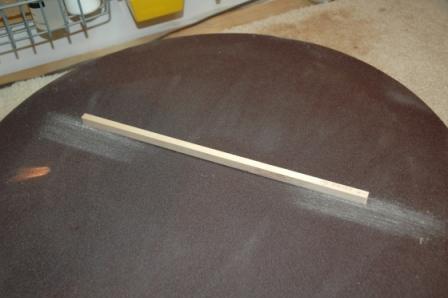
080928radius30.jpg

Glued in the back braces in the go-bar clamping deck.
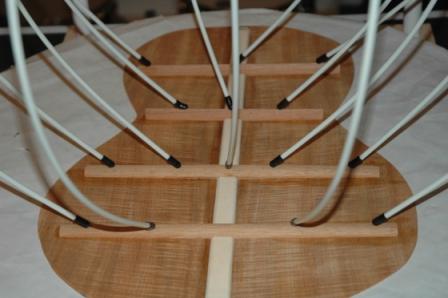
080928gobarback.jpg

Did my best to square up all the braces, but they came out a skosh askance.
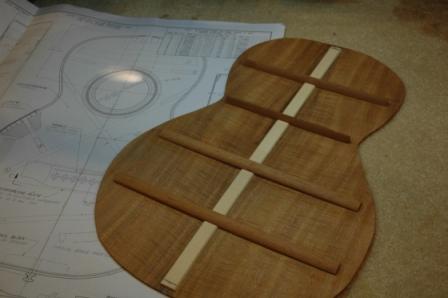
080928backbraced.jpg

Just finished gluing in the top braces.  Only the x-brace is radiused.  The bridge plate is dry fitted until I can free up some go-bar rods after the top brace glue dries (later tonight).
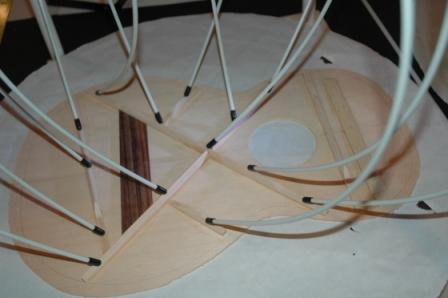
080928gobartop.jpg

You can see that the Parlor has far fewer braces than the OM as it is a smaller footprint.  I’m going to shave all braces down to zero as they approach the kerf line.  The small size won’t require as much brace strength, and I think the tone will improve with less brace material.
Banjo repair – neck finished?

September 27, 2008

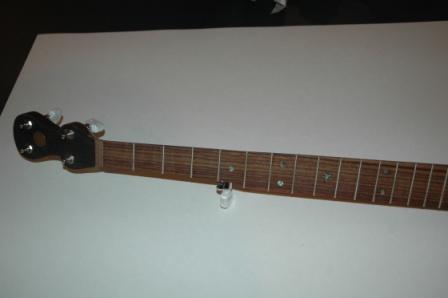
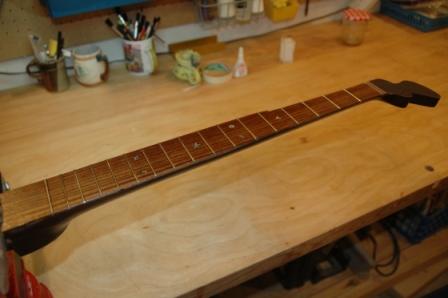
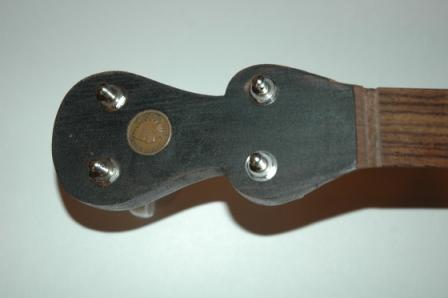
I’ve finished the first phase of the banjo neck refret, resurface, and installation of tuning pegs.  Next steps will be taken after consultation with Tom.

080927banjohead.jpg

Tom had me install a 1907 penny in headstock.

080927banjo5thpeg.jpg

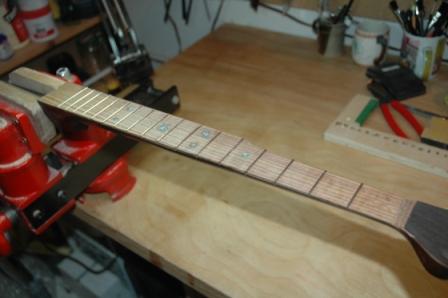
Inlay looks good, gotta polish that fretboard.  5th string tuning peg just dryfit, not secured.  Need to set the little bone/plastic peg in the fretboard to guide the string.

080927banjoneck.jpg

It’s a nutless neck.

Guitar 804 – Rosette flooded

September 27, 2008

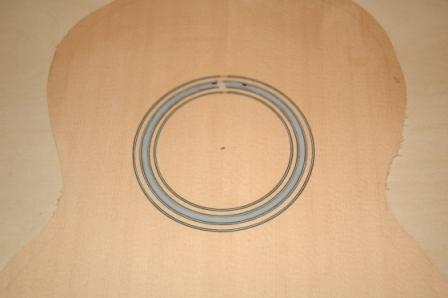
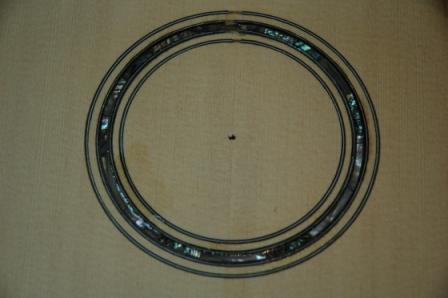
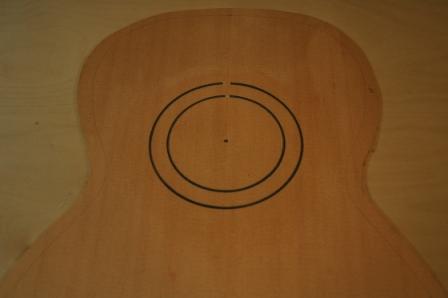
Went throught the process of routing out the center ring channel to accomodate the BWB/Abalone/BWB.  In the end, it was a little too wide.  By using a flooding method to secure the abalone, it will all come out looking fine, but ultimately it would be cleaner with a narrower channel.

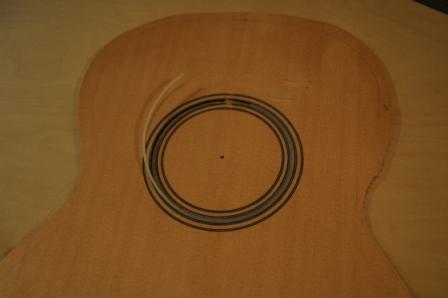
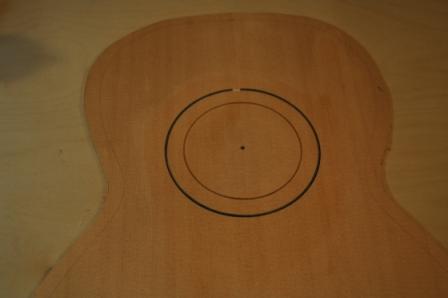
First glued in the BWB/Teflon/BWB.

080927teflonin.jpg

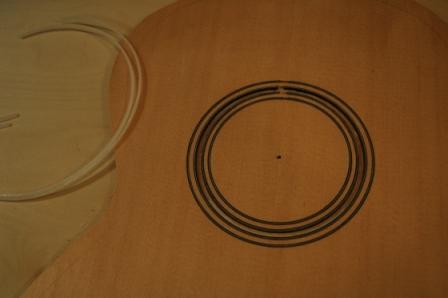
After drying, removed the teflon strips.

080927teflonleaving1.jpg

080927teflonout.jpg

Based upon recommendation from C. Fox, I coated the open channel vacated by the teflon with vinyl sealer.  I’ll be using superglue to secure the abalone, and apparently the sealer will keep the BWB from bleeding when confronted with superglue.

After the sealer dried, I carefully laid the abalone in the channel, which is when I realized it was too wide for my abalone chips.  I centered the abalone in the channel and attempted to butt each strip up close to the next.  My hope is that the gaps between the chips and each other and the side wall will disappear with the superglue flooding.

080927rosettetobeflooded.jpg

Several applications of superglue later, sufficient drying time (overnight as it was very thick), I sanded down and am somewhat pleased.

080927rosetteflooded.jpg

Next time:  narrower channel, shallower channel, multiple thin applications of superglue, rather than few thicker.

Guitar 804 – Groovin’ the Rosette

September 24, 2008

Larry is going to procure an LR Baggs pickup for his OM Maple, but that’s not the reason I’ve sidelined to work on the parlor.  I am going to resume neck shaping on the OM, but wasn’t in the mood tonight.

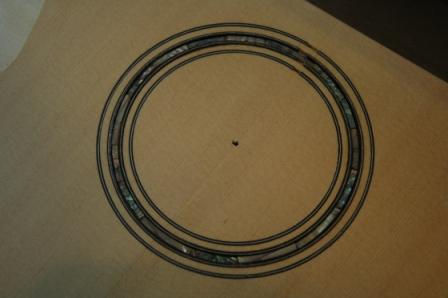
I decided to begin installing the rosette for the parlor.  This will be my first foray into using abalone.  Charles Fox suggested a method which I will employ:  Rout the channel for the BWB Abalone BWB center ring, glue in the inside BWB with a strip of teflon where the abalone will go followed by the outside BWB.  Let it dry, remove the teflon, then press in the abalone arcs (after dressing the cavity with vinyl sealer), then flood the abalone with superglue.

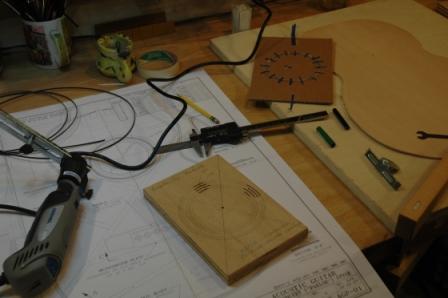
In order to get the channel just right, I devised a rosette jig, a scrap piece with the properly measured channels pencilled in with a small routed channel about 1″ long for each.  This will allow me to reproduce the dremel settings without doing “test cuts” on the actual guitar top.

080924rosettejig.jpg

First, I’ll rout the inner and outer channel and install the BWB, let dry, scrape, then tackle the center ring.

080924rosette8.jpg

Ring one! (Outside)

080924rosette9.jpg

Ring two! (Inside).  I slapped some wax paper on, set on a caul and put my old heavy bench plane on top to hold down.

Banjo Repair

September 24, 2008

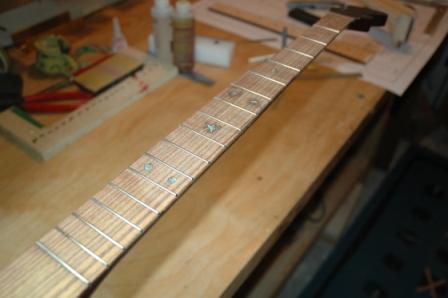
Mixed a wee bit of Z-poxy and applied to fretboard.  Used a scraper to squeegee into the pores and smooth off.  It added a nice darkness to the rosewood, and after lightly sanding I’ll determine if it needs a second coat.

080924banjoneck.jpg

Banjo Repair

September 23, 2008

Set in new frets, trimmed and filed.  Next step is to apply Z-poxy pore filler on rosewood veneer fretboard surface.

080923banjofret.jpg

080923banjofret5.jpg

Guitar 803 – Neck dry fit

September 21, 2008

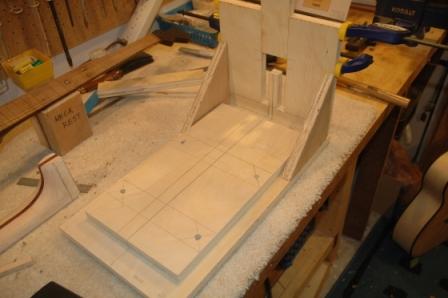
Yes, it’s been 3 weeks since I’ve posted anything to the blog.  I haven’t made much progress up until today.  I spent quite some time working on the neck, shaping with a spoke shave and rasp.  It’s getting very close to the true shape.  Next step was to build a jig to allow the shaping of the tenon on the neck at the right angle.

080921neckjig1.jpg

I used the jig on the O’Brien DVD as a model.  It took two weeks to complete, but mostly due to inactivity rather than difficulty.

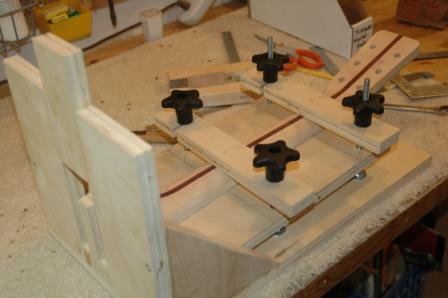
080921neckjig2.jpg

The slot in the rear is for the router to shape the tenon.

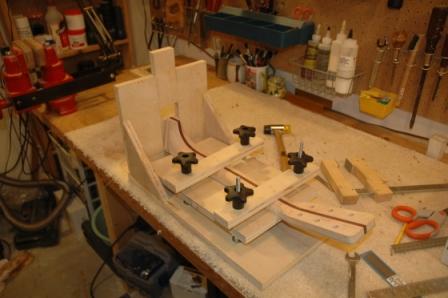
080921neckjig.jpg

The platform can be adjusted to ensure level, and angle based upon the angle measured between the guitar top and the top of the rim.  It took me quit some time to devise a way of discovering the angle, then transferring it to the jig.  Suffice it to say it includes using a level, a sliding bevel and pencils.

I did run into several problems, including an improperly seated router bit which damaged my collet.  As I could not find a replacement collet quickly, I bought a new router (which I needed anyway).  It’s a man thing.

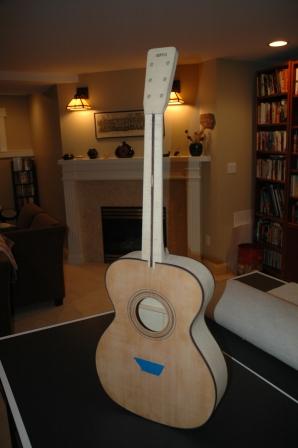
The end result is reasonable, and I was able to dry fit the neck to the body.  What remains is some selective shimming, marking the end of the neck to drill the holes for the neck bolt receivers.

080921neckdryfit.jpg

080921neckdryfit1.jpg

Dreadnought OM OOO

August 24, 2008

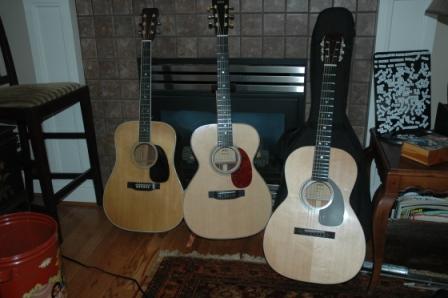
I was briefly waylaid by adapting a keyboard shelf in the kitchen to hold our DVR and DVD player.  I had three of my guitars in the room side by side and thought it made a good comparison photo of the differences in guitar sizes.

On the left is my 1972 Martin D-35, a dreadnought.  Center is the recently finished OM, 14 fret model.  And, on the right, the 12-fret OOO.

dsc_0033.jpg

Guitar 803 – Resume

August 21, 2008

Now it’s time to resume multitasking and go back to working on Larry’s OM Maple, and the Koa Parlor.  My first guitar took 3 months to complete, but that was done without distractions of multiple guitars in progress.  It’s been 5 months since I finished guitar number 1, but I can’t say that’s how long it takes to build one guitar.  I’m 75% done with the OM Maple, and about 25% done with the Koa Parlor, and I’m sure I’ll have them both finished before the end of the year, which is still about a guitar every 3 month pace.  Don’t forget I have a full time job, a family, a dog, and an active golf habit.  If I could dedicate my entire day to working on guitars, it would be weeks instead of months to complete.

So off to restart my work on the OM Maple.  I’m ready to set the neck angle and route out the tenon on the neck.  The last guitar was constructed with an incorrect neck angle and I had to compensate by installing a very tall saddle.  I know better now, and the neck angle on this guitar will be PERFECT.

Guitar 802 – FINISHED!

August 21, 2008

5 months after starting my second guitar, I’m essentially finished.  I’ve got to clean up some polishing dust, trim back the nut a little on the treble side, and install a strap button on the neck heel.  But, I raised the bridge a skosh, polished the frets, laid down a little lemon oil on the ebony, strung it back up……..and it plays beautifully.  Yes, the sound is different than my D-35 and the OOO, but, I’m very pleased with the results.  I think it truly could be a bit bolder, but I attribute that to leaving a bit too much material on the braces.  And I mean, just a bit.  I don’t have the opportunity to go back and shave extra material from this guitar, or Larry’s OM Maple, but I will certainly move more toward the petite on the Parlor.

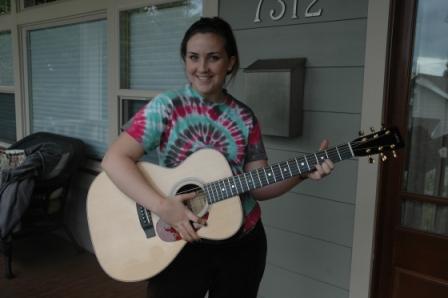
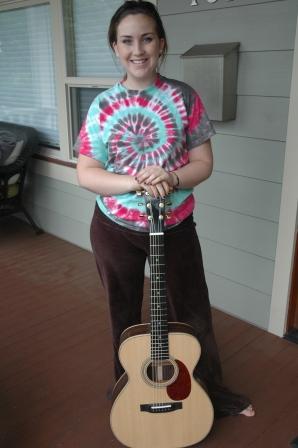
As I mentioned, I decided to give this one to my daughter, and to her, it’s a damn sight better than the Stella she learned on.  I’m partial to the “learn on a Stella” path, as that is exactly how I started playing guitar 43 years ago.  Rachel can’t wait to return to school (NYU – Tisch) and take her new sMg guitar with her.  She’s pleased, I’m pleased, so pleeeeaase…..love me do, oh oh, love me do.

080821finished2.jpg

080821finished1.jpg

« Prev - Next »