Archive for the 'Guitar Building Logs' Category

Guitar 1001 – Headstock inlay installed

September 20, 2010

Now that the inlay for the headstock has been cut and mounted on card stock, it was centered and glued to the headstock.  The perimeter of the inlay was used as a guide to score the ebony faceplate.  A knife was used to pry off the glued inlay.  Left behind is a nice scored outline of the inlay, and a dremel tool with an end mill is used to route out the cavity.
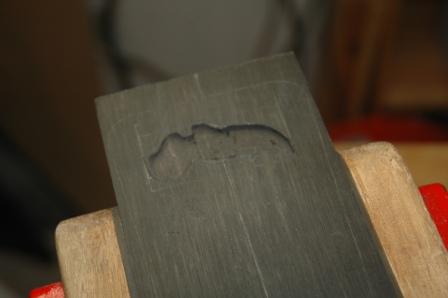
100920cavity

The inlay was dry mounted into the  cavity to check for fit.  After a few adjustments, the inlay rests nicely in the cavity.
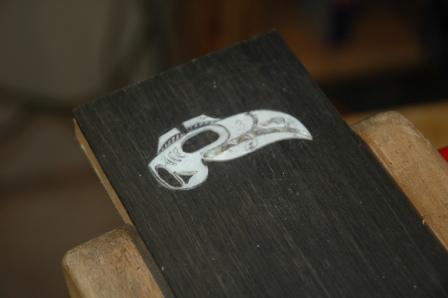
100920incavity

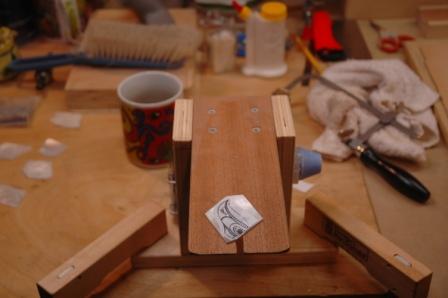
Black epoxy is mixed up and the cavity is flooded, the inlay squooshed in and then more black epoxy is glooped on to the surface.  Parchment paper is laid on the surface, with a wood scrap on top weighed down to press epoxy into any gaps.  This will be left to dry for 24 hours before sanding to reveal what I hope is a very nice design.
Guitar 1001 – Headstock inlay

September 19, 2010

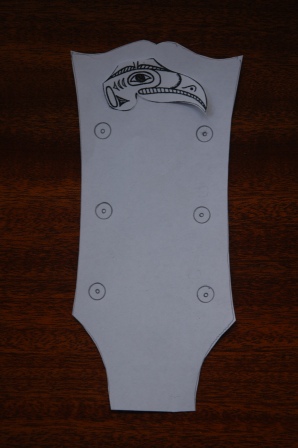
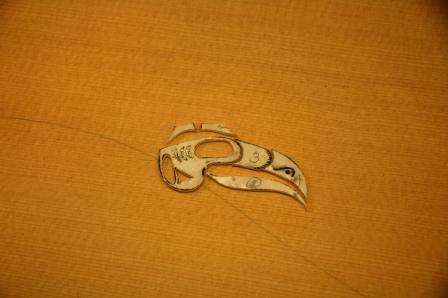
The raven design size will by 80% of the original to fit nicely on the Gibson-like headstock shape.  Using reproductions glued to MOP and paua, the shell is cut out in sections.

100919shelljig

The majority of the design will be in MOP with accents and teeth using paua.  This photo shows the first sections ready for cutout on the shell sawing jig.

Once the MOP is all cut out, the paua accents are cut.

100919ravenmop

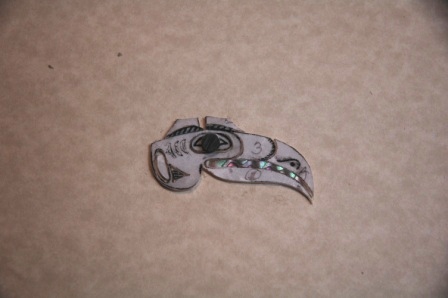
After cutting the final pieces, they are glued to card stock.

100919ravencutout

After the glue dries, the card stock will be trimmed flush with the shell, then any rough or misaligned edges will be filed smooth.  This assembly will then be glued to the headstock and a cut line will be scored all around the inlay.  The glued inlay will be removed from the card stock and the headstock and the cavity will be routed out using a dremel.

The individual pieces will be placed in the cavity to determine final shaping of each piece before gluing in with black epoxy.


Guitar 1001 – Headstock design confirmed

September 8, 2010

Headstock design has been finalized.


Guitar 1001 – Rosette construction

September 8, 2008

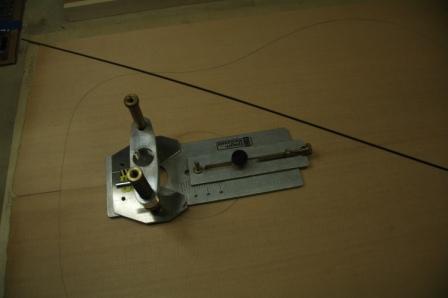
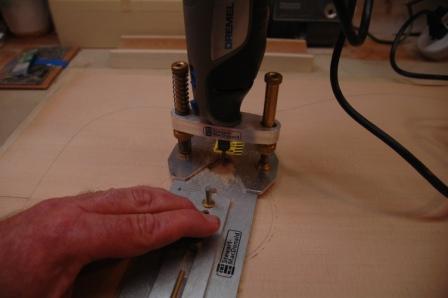
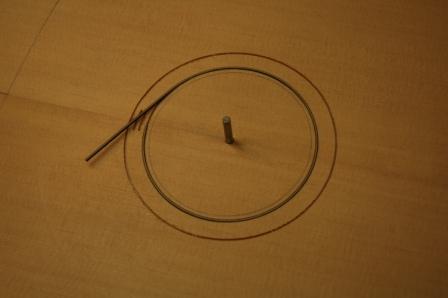
Rosette construction for the Koa Dreadnought begins with locating the center of the soundhole, drilling a 3/16″ hole then mounting on a center pin on a workboard on the workbench.  This pin matches a dremel circle cutting jig.  A downcut end mill is used in the dremel to cut channels for the rosette purfling.

100907acirclecutter

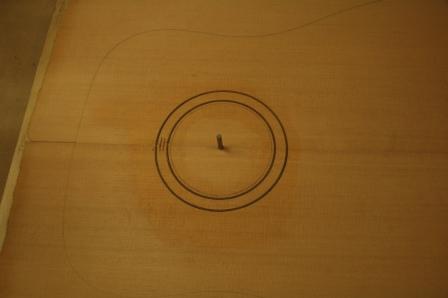
First and second pass is for the inside and outside rings with a 3/32″ end mill.

100907broutechannels

After the channels are routed, the purfling is installed with white glue.  Each purf strip is pressed in and the glue squeeze out is cleaned up.

100907cinstallpurf

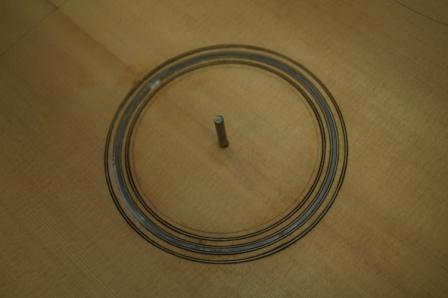
Before routing the center channel, the installed purf is allowed to dry and then scraped down to plate surface level.

100907doutsiderings

The center channel width is 2 purfs plus a .063″ center teflon strip.  The teflon strip is the same width as the Abalam shell which will go between the inside and outside purf in the center channel.  The channel is prepped with white glue and the purf/teflon/purf sandwich is pressed into the center channel.

100907fteflon

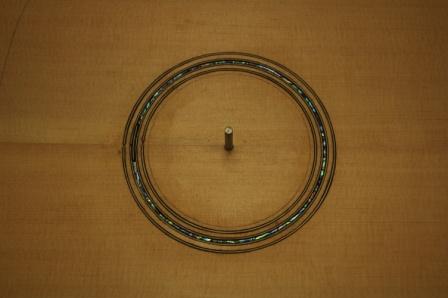
After drying, the teflon strip is pulled out, the cavity is cleaned up to remove any dried glue clumps, then curved Abalam strips are pressed into the cavity.  CA glue is flooded onto the Abalam.  Several applications of CA are needed to fill the channel before the rosette rings are ready to be scraped flush and sanded.  Only after the rings are flush will the soundhole be cut out.

100907gfloodshell

Guitar 1001 – Joining plates and thickness sanding

September 6, 2010

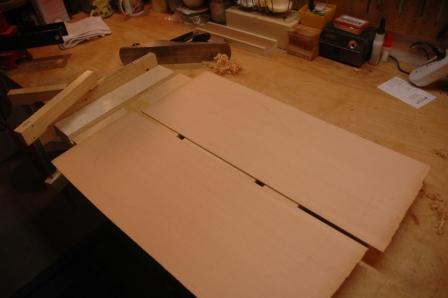
The top has been planed down to .105″ in preparation for joining.

100905topplates

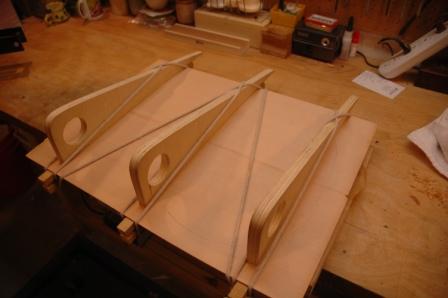
Using a shooting board and plane, the edge is jointed, then glued and secured in the joining jig.

100905spanishjoin

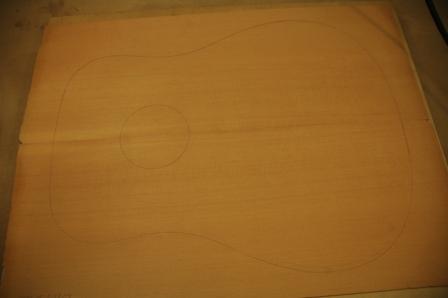
After an hour in the jig, the plate is removed and the glue squeeze out is removed with a cabinet scraper.  The top is then fine sanded.  The joint has been notched at both ends to positively locate the center line.  The dreadnought top template is used to trace the top shape to the outside and locate the center point of the sound hole.

100905topjoined

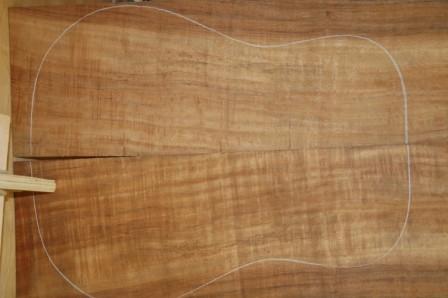
This is really a very nice piece of Sitka Spruce.  It has lots of waterfall curl which is very subtle yet pleasing.  The center of the soundhole is drilled with a 3/16″ bit and the plate is mounted on a workboard with a 3/16″ pin in preparation for routing the purfling channels.

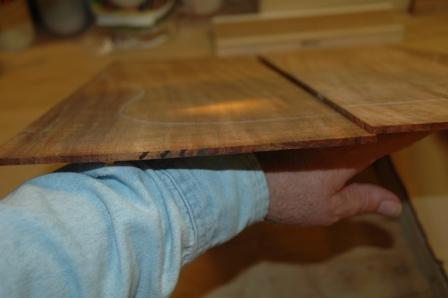
The back plates started at .170″ and need to be thickness sanded down to .090″.  My drum sander has a few issues which need resolution.  First issue is the drive belt drifts off center and needs calibration.  Second issue is that the drum is not within tolerance of being parallel (drum to drive belt).  Additionally, koa tends to burn slightly in the drum sander.
Once these adjustments are made, and the sanding drum has been cleaned up to remove previously deposited burn streaks I will be able to sand down the back plates to approximately .100″ in preparation for joining.

100905platethickness

100905backplates

Guitar 1001 – Headstock Variations

September 1, 2010

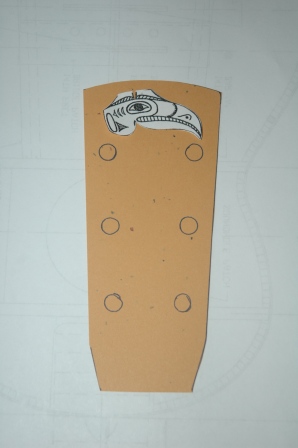
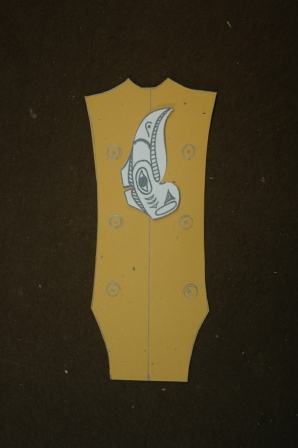
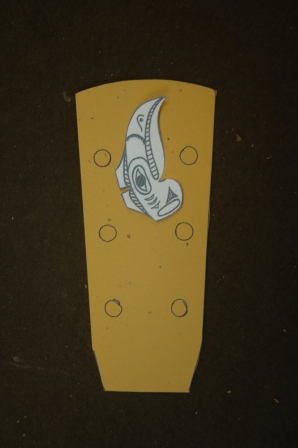
I sent 3 options for the headstock to Steve for his approval.  Using his raven inlay design, the first option was to position the raven aligned to the top of the headstock.

100901headstock

The next two are variations of the same alignment, with the raven down between the tuners.

100901headstock1

100901headstock2

Guitar 905 – Keep the customer satisfied

July 22, 2010

I’m enrolled in a program to get my secondary mathematics certification (Those who can, do, those who can’t, teach…yeah I know I’ve heard it all before).  It has taken away time from building guitars as the homework is oppressive and the reading is double secret oppressive.

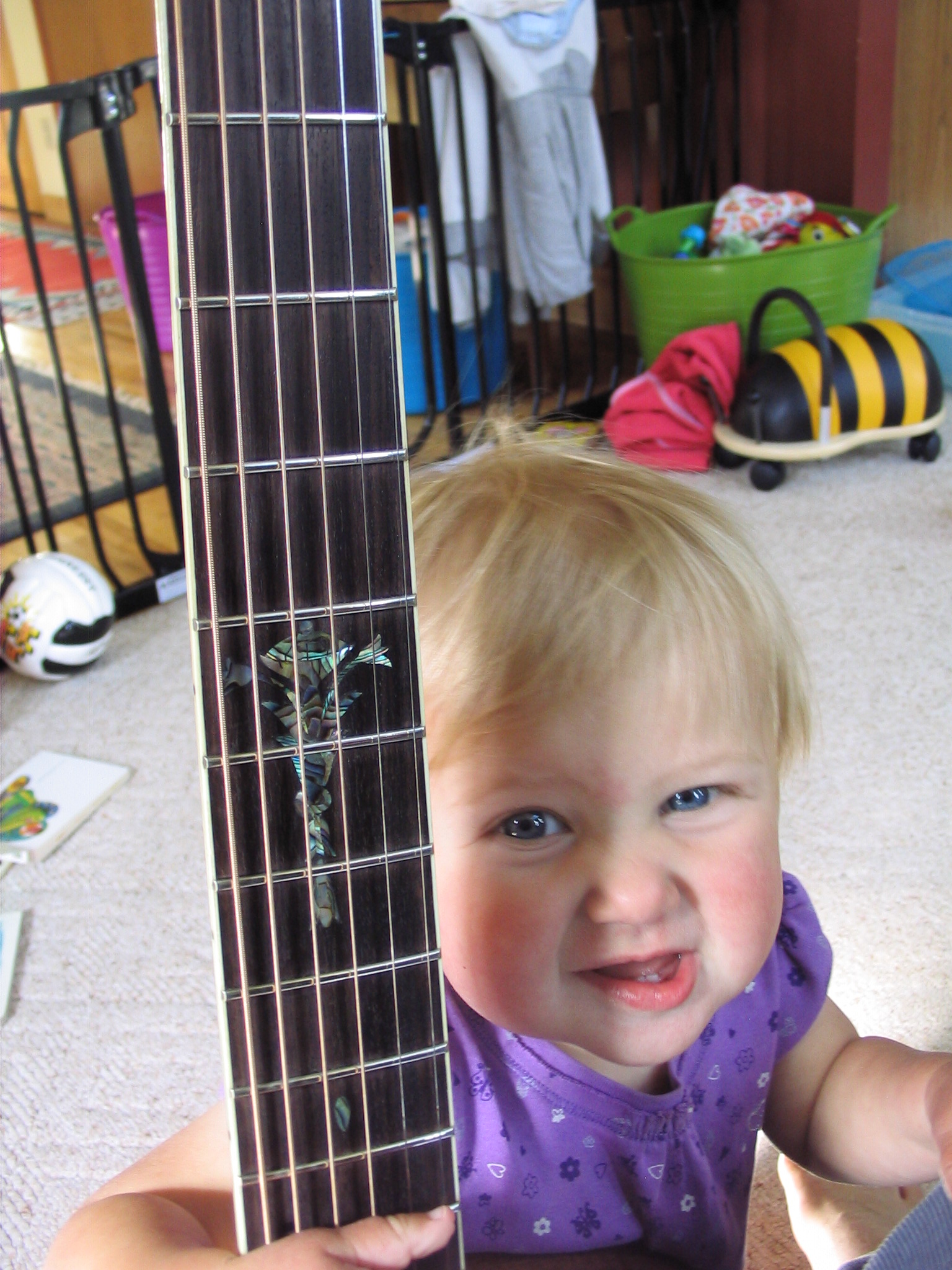
I’m progressing on guitar 1001, but in niggles and bits.  John, customer of guitar 905 has sent me a few “baby pictures”.  Pictures with babies and guitars, that is.  The guitar was dedicated to his daughter Annabelle, and here she is.

annabelle-guitar-1

Yeah, babies are cute.  Get ’em started early, and they’ll be awesome guitarists.

Guitar 905 – Gallery

July 1, 2010

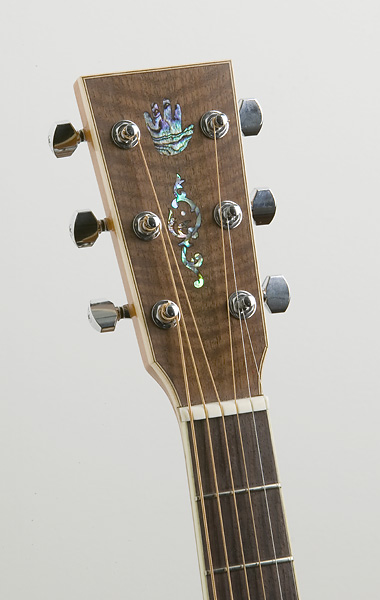
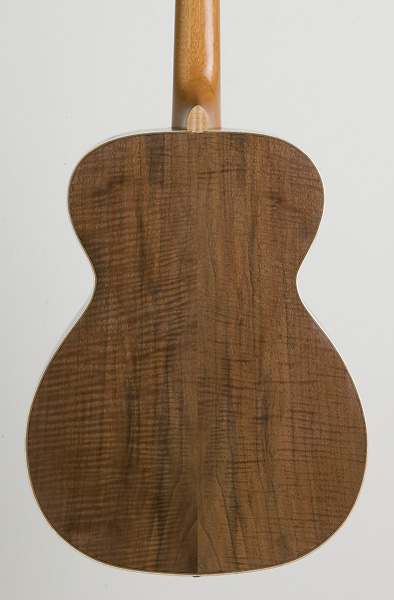
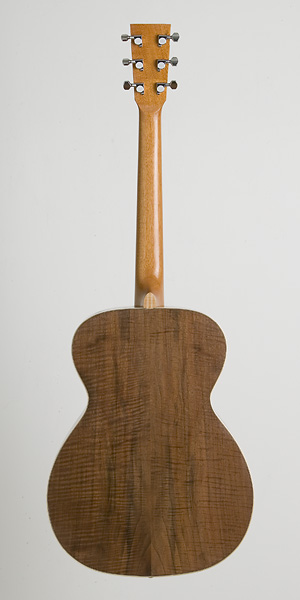
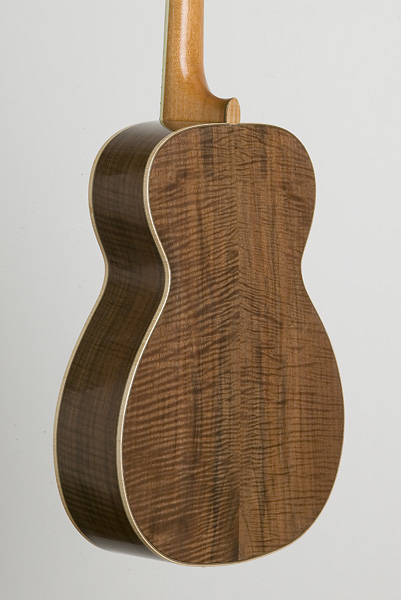
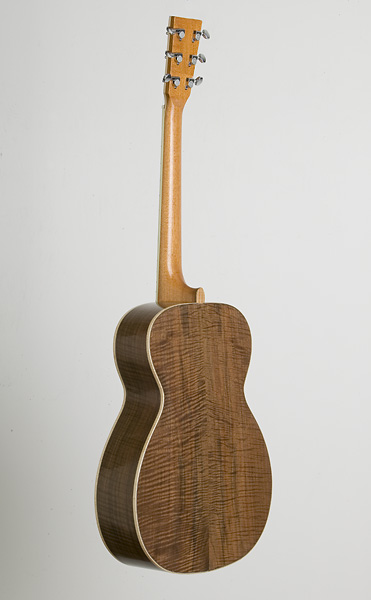
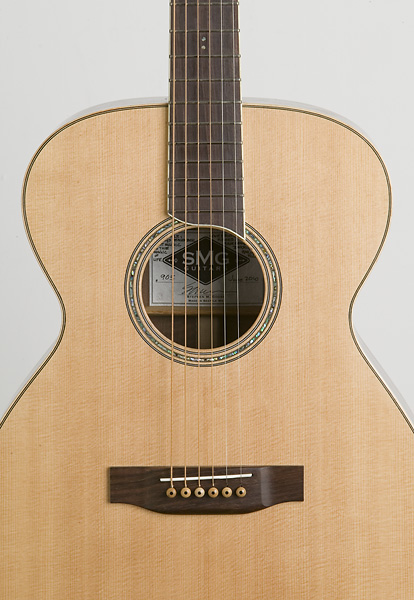
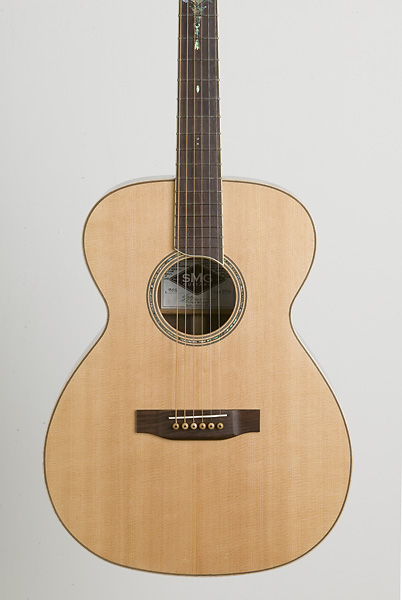
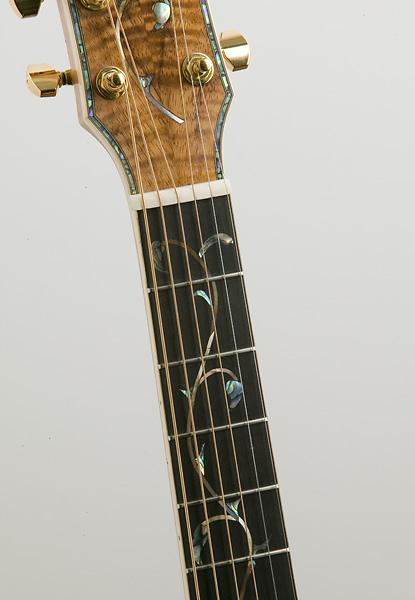
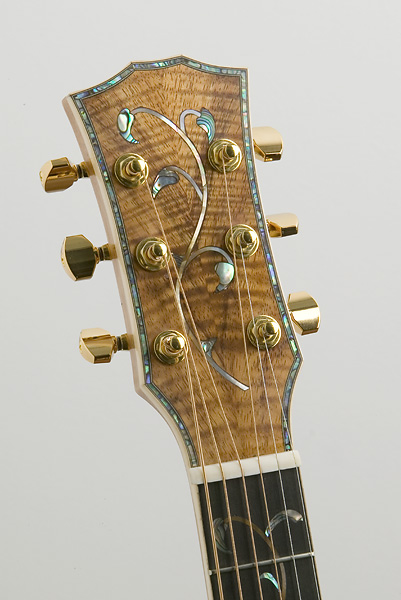
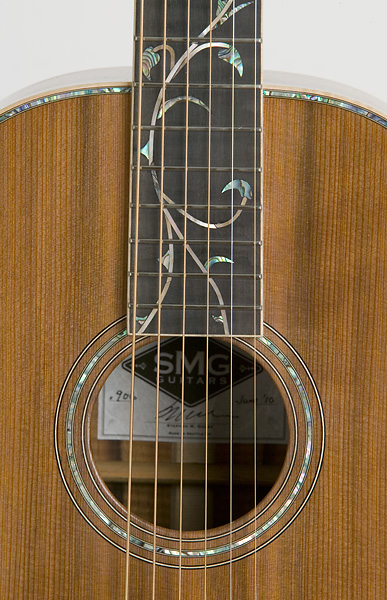
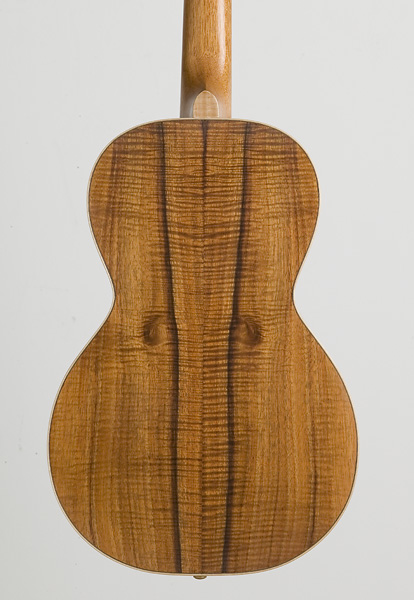
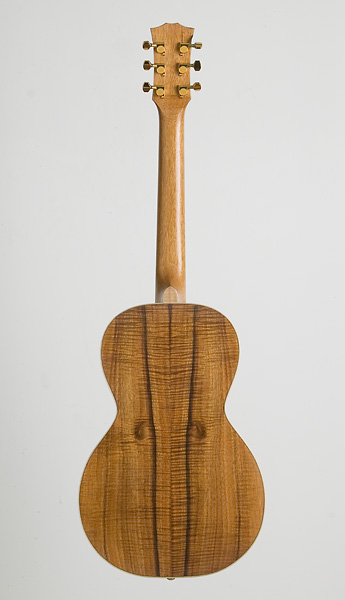
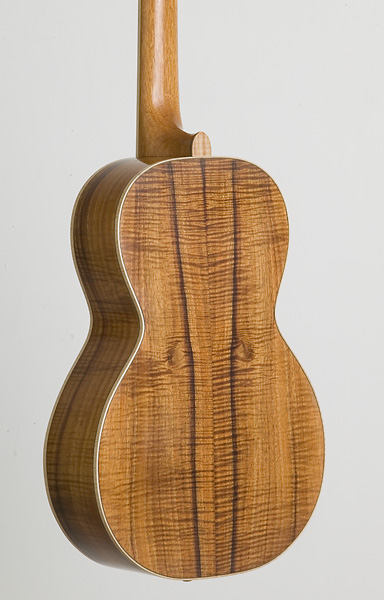
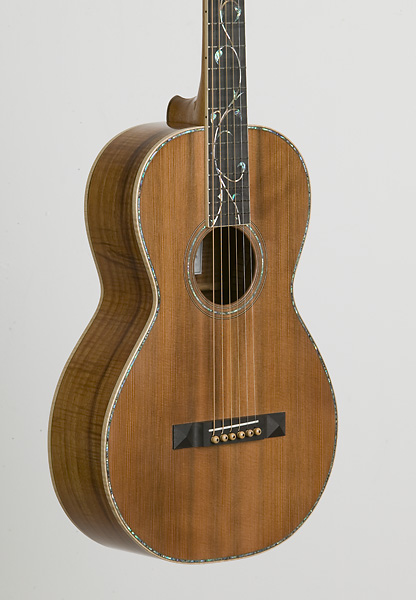
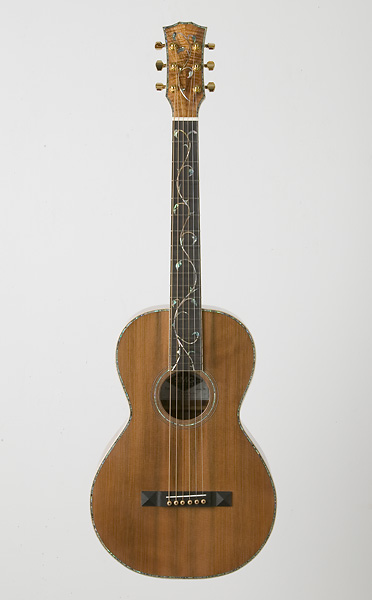
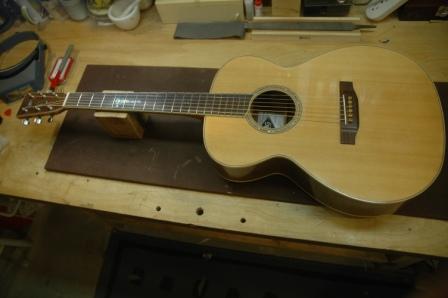
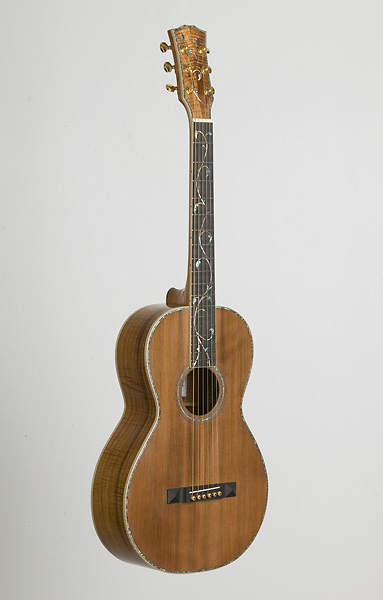
Guitar 905 photo gallery.  Headstock design came from client.

c69t1867

c69t1863

c69t1861

c69t1859

c69t1856

c69t1854

c69t1852

c69t1850

c69t1847

Guitar 906 – Gallery

July 1, 2010

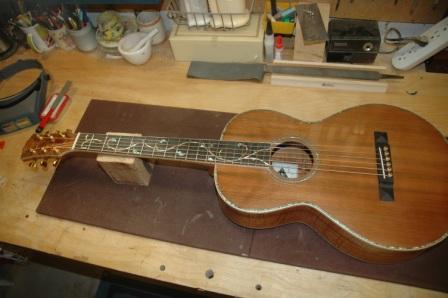
Photos of Guitar 906.  Very proud of the inlay.

c69t1876

c69t1872

c69t1870

c69t1869

c69t1843

c69t1841

c69t1839

c69t1835

c69t1833

c69t1831

c69t1829

c69t1827

Guitar 905 & 906 – Ready for their closeup

June 24, 2010

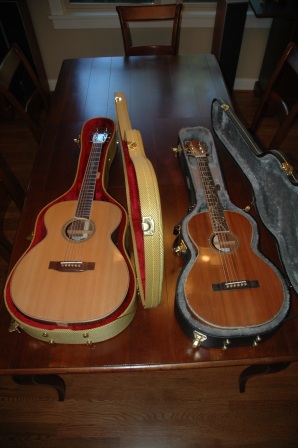
Tomorrow, Tom does his photo documentation of these guitars as the final step before turning them over to their owners.  Carl picks up 906 on Saturday, and I ship 905 to John on Monday.  I have lots of time to play them before they go on their way.

100624done

100624done

100624readytoship

« Prev - Next »